
Two Hours for a Beet: The Case for Slow Vegetables
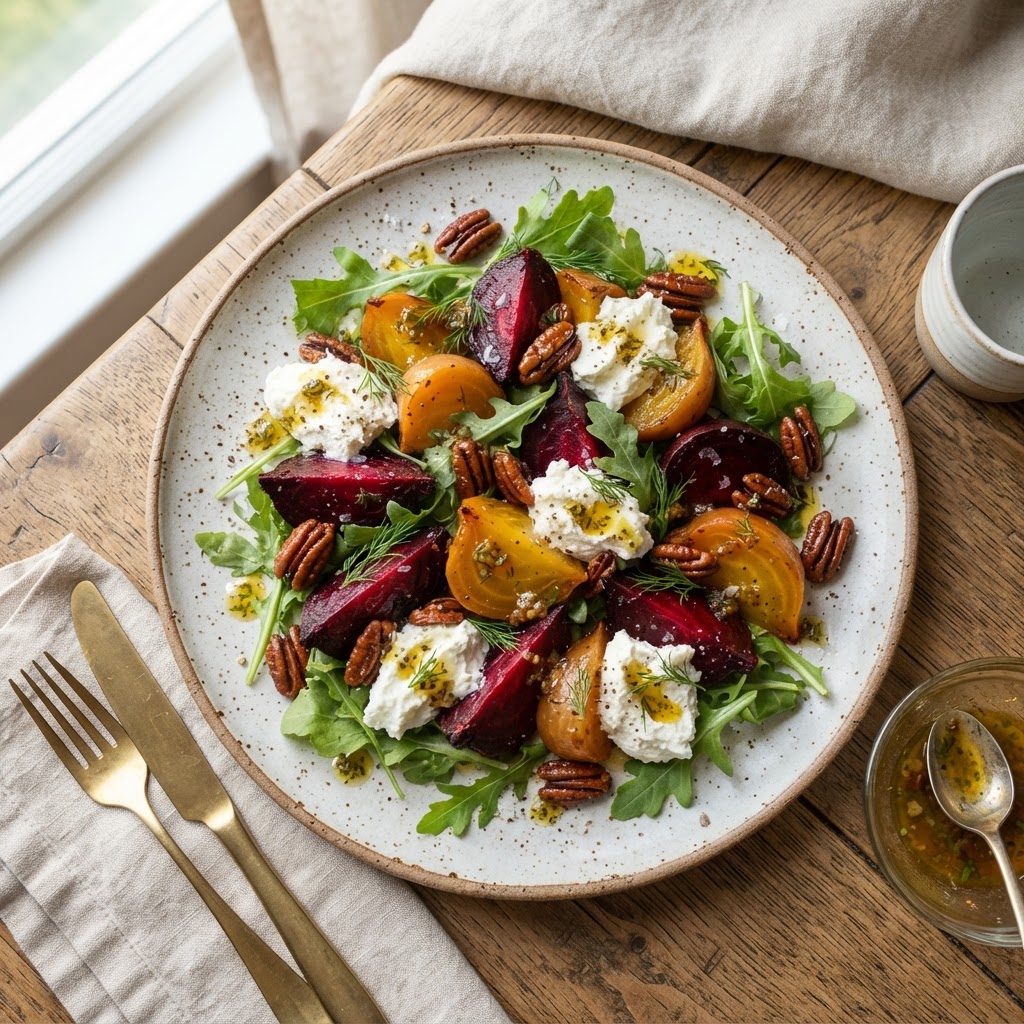
Most kitchens boil their beets. It's faster, it's easier, and it strips out half of what makes a beet worth eating.
Houston sits at the edge of some of the richest vegetable-growing soil in the state, and farms like Atkinson Farms have spent generations proving that a slow-grown root vegetable rewards a slow-cooked approach. It's a quieter kind of Houston food story than brisket or Gulf shrimp — no smoke, no boats, just dirt and patience — but Chef Pat treats it with the same seriousness.
He roasts every beet whole and skin-on, for almost two hours. It's slower than nearly anything else on the menu, and there's no way to speed it up without losing what the technique is for.
It's slower, but it's the only way to get that deep, earthy sweetness.
Chef Pat
Boiling a beet leaches its sugars and pigments straight into the water — which is why boiled beets taste washed out and the water turns violently pink. Roasting whole, skin-on, keeps everything sealed inside. The beet essentially steams in its own moisture, concentrating its natural sugars over two slow hours in a low oven instead of losing them in a pot.
The skin, left on during roasting, acts as a natural barrier, and it slips off easily by hand once the beet has cooled — no peeler needed, and none of the nutrients lost to a blade. What comes out is a beet that's tender all the way through with a caramelized, almost dessert-like sweetness, which is exactly what stands up to whipped goat cheese, candied pecans, and a citrus vinaigrette without disappearing under them.
It's the least flashy dish on the menu and, in Chef Pat's opinion, one of the hardest to rush.
L.LeSure